
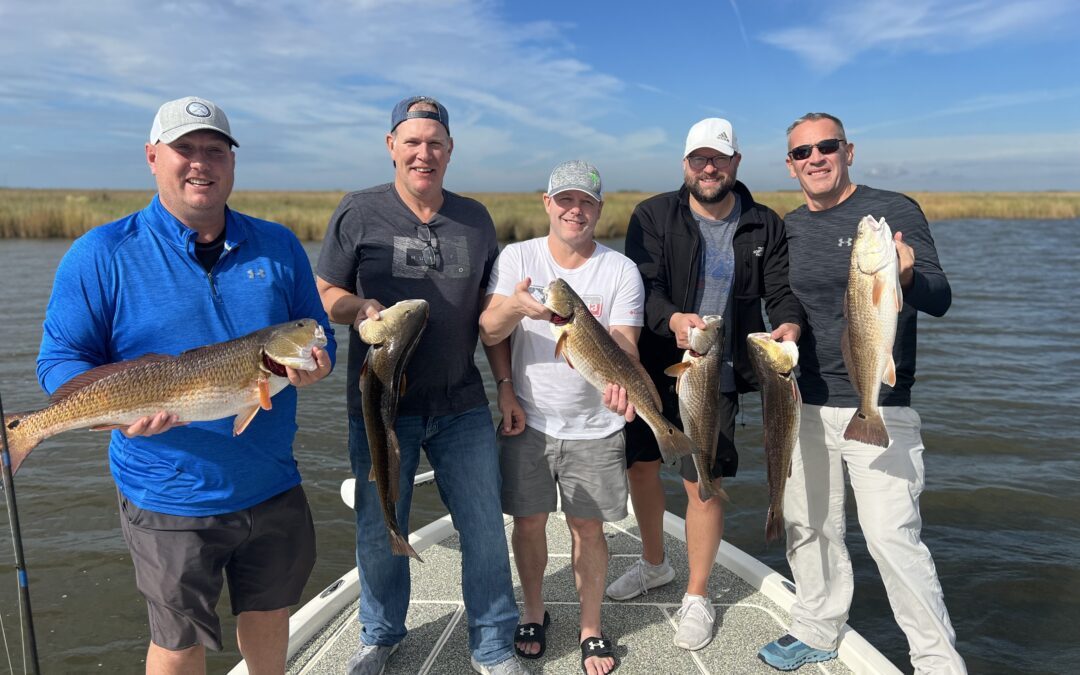
New Orleans anglers ask the same question year-round: when’s the best time to fish?
The honest answer is that the marsh around Delacroix, Hopedale, and Shell Beach produces fish twelve months a year. But “productive” doesn’t mean “identical.” What’s biting, where the fish are holding, and what technique works best all shift as the seasons turn.
Here’s what to expect month by month, so you can plan a trip around what’s actually happening in the water instead of guessing.
Winter: December Through February
Winter near New Orleans is redfish season for anglers who don’t mind cool mornings.
Cold fronts push water temperatures down, and reds respond by grouping up in tight schools in the deeper interior ponds and canals where the water holds a little more warmth. When you find the school, the action can be non-stop.
Speckled trout slow down in winter but don’t disappear. They hold in the deepest cuts and channels, feeding less often but still catchable on the right presentation.
Winter days start later — no 5:30am launches required — and the marsh is quiet. Fewer boats, fewer bugs, and some of the best sight-fishing conditions of the year on clear, calm days.
Spring: March Through May
Spring is the transition everyone waits for. As water temperatures climb, redfish spread back out of their winter holes and speckled trout activity picks up fast.
March can still be unpredictable — a late cold front can reset the pattern for a few days. By April and May, the bite stabilizes and the marsh comes alive. Bait moves in, birds start working, and both redfish and trout feed aggressively through the morning.
Spring is also when flounder and sheepshead activity increases around structure, giving trips more variety.
Summer: June Through August
Summer near New Orleans is an early-morning game. The heat pushes fish into predictable windows — first light to mid-morning — before the sun gets high and water temperatures spike.
Redfish tail in the shallow marsh ponds at dawn. Speckled trout hold around oyster reefs and nearshore structure where moving water keeps them fed. Sheepshead sit on structure regardless of the calendar, and flounder ambush bait along the bottom.
Summer trips reward anglers who are willing to be on the water before sunrise. The fishing is excellent — it’s just concentrated into a shorter window than the rest of the year.
Fall: September Through November
Fall is when a lot of experienced anglers say the fishing peaks near New Orleans, and the water backs it up.
As temperatures cool, redfish feed more aggressively and for longer stretches of the day — the tight early-morning-only window of summer opens up. September brings that transition. By October, slot reds and bull reds are both active, with bull reds pushing into the outer bays and passes around Breton Sound. November tends to extend the bull red run before winter patterns set back in [needs Jimmy confirmation: exact timing of bull red push each year can shift].
Speckled trout stay productive through fall on oyster structure, and the weather is some of the most comfortable of the year to be on the water all day.
So When Should You Book?
If you want calm mornings and quiet water: winter.
If you want the bite waking back up after a slow stretch: spring.
If you want to fish early and be back for the rest of your day in New Orleans: summer.
If you want the widest range of species, the most aggressive feeding, and the most comfortable weather: fall.
There isn’t a bad month to fish near New Orleans. There’s just a best month for what you’re looking for.
You Came for New Orleans. Now Get Into the Marsh.
Most people come to New Orleans for the food, the music, and the culture. And they should — there’s nowhere else like it.
But if you’re already making the trip, you’re 35 minutes from one of the best inshore fisheries in the country. Getting out on the water isn’t leaving New Orleans behind — it’s seeing the rest of it.
The same coast that produces the shrimp, the crawfish, and the oysters on every menu in the French Quarter is alive out here in the marsh. Louisiana didn’t earn the name “Sportsman’s Paradise” by accident. You just don’t see that part from Bourbon Street.
Spend your evening eating and listening to live music. Spend your morning sight-casting to tailing reds in the marsh. Not many places in the world let you do both in the same 24 hours.
Captain Jimmy Corley runs guided trips out of Shell Beach year-round. Call (504) 258-4431 or book your trip online.
Frequently Asked Questions
Q: What’s the best month to fish near New Orleans?
A: There isn’t one single best month — it depends on what you want. Fall (September through November) offers the widest variety and most aggressive feeding. Summer is excellent but concentrated into early mornings. Winter and spring both have their own strengths for calmer conditions and a season transition bite.
Q: Is winter fishing near New Orleans worth it?
A: Yes. Redfish group up predictably in winter, and the marsh is quiet with fewer boats around. It’s some of the best sight-fishing conditions of the year on clear days.
Q: When do bull redfish show up near New Orleans?
A: Bull reds push into the outer bays and passes around Breton Sound as fall arrives, typically peaking in October and November [needs Jimmy confirmation: exact month-to-month timing]. Captain Jimmy tracks their movement and adjusts trips to find them.
Q: What species can I catch year-round near New Orleans?
A: Redfish, speckled trout, and sheepshead are all catchable in every season, though where they hold and how aggressively they feed changes with water temperature. Flounder are also available year-round as a bonus species.
Q: Do I need to plan my trip around a specific season?
A: No. Captain Jimmy fishes the New Orleans marsh year-round and adjusts technique and location to whatever season you’re visiting. Any time of year is a good time to book.
Ready to Fish?
Call Captain Jimmy at (504) 258-4431 or book online at waterfowlspecialist.com
Shell Beach, St. Bernard Parish — 35 minutes from downtown New Orleans